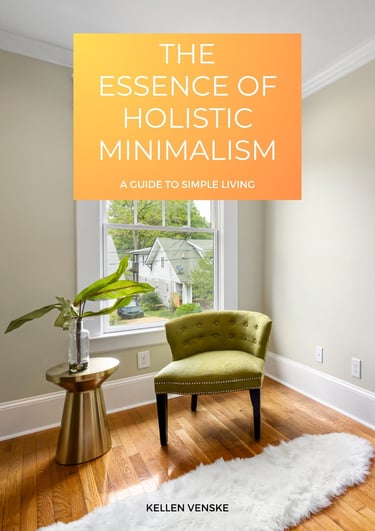
Minimalism as Healing
How Simplifying Life Can Support Mental and Emotional Wellbeing
1/22/20265 min read


Minimalism is often misunderstood. For some people it is a design trend. For others it is a productivity tool or a way to save money. But for many people who are drawn to minimalism without fully knowing why, it has very little to do with owning fewer things and a lot to do with feeling better.
Not better in an aspirational sense. Better in a physical and emotional sense. Less tense. Less overwhelmed. Less weighed down.
This is where minimalism as healing begins.
Many people arrive at minimalism during periods of exhaustion. Not always dramatic burnout, but a quieter form of fatigue that builds over time. Life feels crowded. Days feel full without being satisfying. There is a constant sense of managing, maintaining, keeping up. Even rest can feel like another task.
Minimalism does not solve all of this. But it often provides relief, and that relief is not accidental.
Why modern life feels heavy
Most people today are not struggling because they lack tools, information, or opportunities. They are struggling because they are overloaded. Overloaded with choices, commitments, expectations, objects, and inputs.
Homes are filled with things that require attention. Phones are filled with notifications that interrupt focus. Calendars are filled with obligations that leave little room for rest. Minds are filled with comparisons, noise, and unfinished thoughts.
This constant accumulation creates a low level of stress that becomes normal over time. People adapt to it and assume that feeling tense or scattered is just how life is. Minimalism challenges that assumption by quietly removing some of the pressure.
When there is less to manage, there is less to react to. When there is less asking for attention, attention becomes easier to hold. This is not philosophical. It is practical.
Minimalism is not about discipline
One of the reasons minimalism gets rejected is because it is often framed as a form of self control. Rules about how much you should own. Strict ideas about what is allowed and what is not. Moral judgments about consumption.
Minimalism as healing does not work this way.
It is not about proving anything. It is not about purity or restraint. It is about reducing friction in daily life. If something creates constant tension, it is worth questioning. If something supports ease, clarity, or stability, it probably belongs.
This approach does not require extreme change. It does not require getting rid of everything. It requires paying attention to how things affect you.
The connection between clutter and stress
Clutter is not just visual. It is cognitive.
Every object carries information. Where it belongs. Whether it needs maintenance. Whether it was expensive. Whether you feel guilty for not using it. Whether you should get rid of it.
When there are many objects, the brain processes many small decisions without noticing. This creates mental fatigue. The same applies to digital clutter, unfinished tasks, and excess commitments.
Minimalism reduces the number of micro decisions that fill the day. That reduction creates space. Space is calming because it lowers the background demand placed on the nervous system.
People often describe feeling lighter after simplifying. That feeling is real. It comes from fewer demands competing for attention.
Healing without fixing yourself
Minimalism as healing does not start from the idea that something is wrong with you. This matters.
Many self improvement approaches assume the individual needs to be optimized, corrected, or transformed. Minimalism starts from a different place. It suggests that the environment may be the problem.
If your surroundings are chaotic, your schedule overloaded, and your attention constantly fragmented, feeling overwhelmed is a natural response. Reducing external pressure allows internal balance to return without effort.
This is why minimalism can feel healing even without emotional work. When the environment becomes calmer, the body often follows.
Emotional clutter and invisible weight
Not all clutter is physical. Some of the heaviest things people carry cannot be put in a box.
Unnecessary commitments. Obligations taken on out of guilt. Social expectations that no longer fit. Habits that drain energy but feel hard to stop.
Minimalism as healing includes examining these areas gently. Not everything that has been part of your life needs to stay there. Letting go of commitments can be just as relieving as letting go of objects.
This does not mean cutting people off or becoming isolated. It means being honest about capacity. Healing often begins when people stop agreeing to more than they can realistically carry.
Minimalism and rest
Rest is difficult when life is complex. Even when time is available, the mind may remain active, scanning for tasks, reminders, and unfinished business.
Simplifying reduces this background noise. Fewer possessions mean fewer responsibilities. Fewer commitments mean fewer mental loops.
This creates conditions where rest becomes possible rather than forced. Many people discover that they do not need to learn how to rest. They need to remove what prevents rest from happening naturally.
Digital minimalism as relief
Digital environments are some of the most demanding spaces people occupy. Constant updates, messages, and information keep attention fragmented.
Reducing digital input is often one of the fastest ways to feel relief. Turning off notifications. Unsubscribing from unnecessary content. Limiting social media exposure.
This is not about rejecting technology. It is about using it intentionally rather than reflexively. When digital noise decreases, attention stabilizes. Focus improves. Anxiety often lessens.
Minimalism in this area supports mental clarity in a very practical way.
Minimalism and identity fatigue
Many people feel tired not because they are doing too much, but because they are maintaining too many versions of themselves. Professional identity. Social identity. Online identity. Family role. Creative role.
Minimalism allows identity to simplify. It reduces the pressure to perform constantly. When fewer roles demand attention, people often feel more grounded and authentic.
This is not about rejecting responsibility. It is about recognizing limits. Carrying less identity weight creates space for presence.
Minimalism during periods of overwhelm
People are often drawn to minimalism during difficult periods for a reason. When energy is low, complexity becomes exhausting. Simplifying becomes a form of self protection.
Reducing choices, routines, and expectations conserves energy. This can support recovery during times of stress or transition.
Minimalism does not solve emotional challenges, but it reduces unnecessary strain. That reduction can make coping easier.
Minimalism and the body
The body responds to the environment quickly. Tension increases in cluttered or chaotic spaces. Breathing becomes shallow. Movement feels restricted.
Simplified environments support physical ease. Clear pathways. Fewer obstacles. Predictable layouts.
These changes may seem small, but the body notices them. Many people feel physically calmer in simplified spaces without consciously realizing why.
Minimalism as an ongoing practice
Minimalism as healing is not a one time project. Life changes. Needs shift. What feels supportive at one stage may feel heavy later.
This approach allows for adjustment without judgment. There is no final state to reach. The goal is alignment, not perfection.
Regularly checking in with what you are carrying helps prevent overload from building again.
Letting go without force
Letting go can bring up emotions. Attachment, guilt, uncertainty. This is normal.
Minimalism as healing does not rush this process. It allows release to happen gradually. If something feels hard to let go of, it may be worth understanding why.
There is no requirement to be ruthless. Healing happens through honesty, not pressure.
Minimalism is not deprivation
Reducing does not mean lacking. In many cases it means accessing more of what matters.
More attention. More calm. More space. More energy.
When people remove what drains them, what supports them becomes more visible. This is one of the reasons minimalism often feels positive rather than restrictive.
Who minimalism as healing is for
This approach resonates with people who feel overloaded rather than broken. People who are tired of managing complexity. People who want relief without reinventing themselves.
It is for those who sense that life could feel lighter without becoming empty.
A practical way to begin
Minimalism as healing does not require dramatic action. It begins with noticing.
Notice what drains you. Notice what supports you. Notice what feels heavy. Notice what feels neutral or nourishing.
Small changes matter. Removing one unnecessary commitment. Clearing one surface. Reducing one source of noise.
Healing often begins quietly.
Minimalism as healing is not a trend or a technique. It is a response to modern overload.
By reducing what we carry, we give ourselves room to breathe. Not because we are broken, but because we are human.
Sometimes the most supportive thing we can do is make life easier to live.


My Products
Mindful Living Essentials